
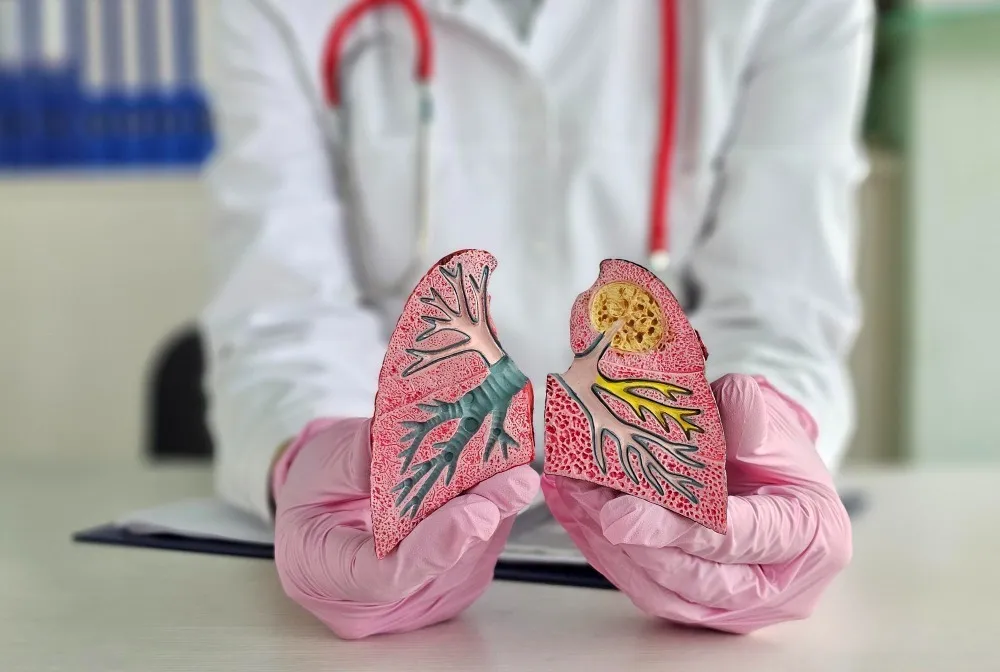
Persistent breathlessness can have many causes, but when it gradually worsens and is accompanied by a long-standing dry cough, doctors may consider conditions affecting the lung tissue itself. Lung fibrosis, also referred to broadly as pulmonary fibrosis, describes scarring within the lungs that can interfere with their normal function.
The term does not automatically explain why the scarring developed. Establishing the underlying cause, where possible, is an important part of respiratory evaluation.
Symptoms That May Raise Concern
Possible symptoms can include:
- Progressive shortness of breath
- Persistent dry cough
- Reduced exercise tolerance
- Unexplained fatigue
- Difficulty performing activities that were previously manageable
These symptoms overlap with many other respiratory and cardiac conditions. They cannot establish a diagnosis of lung fibrosis by themselves.
How Is Lung Fibrosis Evaluated?
Assessment generally begins with a detailed history.
A pulmonologist may ask about occupational exposures, smoking history, previous infections, medications, environmental exposures, autoimmune symptoms, and family history.
Further evaluation can include:
Chest imaging
High-resolution CT imaging can provide detailed information about patterns within the lung tissue.
Pulmonary function testing
Lung function tests can help quantify respiratory impairment and provide measurements that may be useful for follow-up.
Oxygen assessment
Oxygen levels may be evaluated at rest and, when appropriate, during activity.
Additional investigations
Blood tests or other diagnostic procedures may be considered depending on the suspected cause and imaging findings.
Why Identifying the Cause Matters
Pulmonary fibrosis is not one single disease. Lung scarring can occur in association with different conditions, and in some patients a clear cause may not initially be apparent.
Treatment and monitoring therefore depend on the specific diagnosis, severity, progression, symptoms, oxygen requirements, and overall health.
A patient with persistent breathlessness should not assume that lung fibrosis is present based on symptoms or an online symptom list. Conversely, unexplained progressive breathlessness should not be repeatedly dismissed without investigation.
Dr. Pujan Parikh provides respiratory evaluation for patients around Colaba and other parts of South Mumbai, Maharashtra, including assessment of persistent breathlessness and suspected interstitial or fibrotic lung disease.
People who already have a CT report mentioning terms such as fibrosis, interstitial changes, or scarring can benefit from having those findings interpreted alongside their symptoms and lung function.
The purpose of specialist evaluation is to move beyond the broad label of 'lung fibrosis' and determine the pattern, possible cause, functional impact, and appropriate next steps for monitoring or treatment.
Keywords