
Breathlessness is not enough to identify COPD, and the nearest clinic is not automatically the right place for long-term care. You will be able to compare clinicians, understand the tests and treatment decisions involved, and identify a service that can support you between appointments.
Key takeaways
- Choose a pulmonologist experienced in spirometry, flare-ups, oxygen, and non-invasive ventilation.
- Confirm COPD with spirometry before committing to long-term treatment.
- Match treatment to symptoms, flare-ups, oxygen needs, and test results.
- Choose a plan that includes inhaler checks, action steps, and scheduled follow-up.
Compare the Clinician, Not Just the Clinic Location
Choose a clinician with respiratory training, not simply the shortest journey. For a COPD specialist in Mumbai, check for pulmonology or chest-medicine training and regular experience interpreting spirometry, managing flare-ups, assessing oxygen needs, and using non-invasive ventilation. Ask how often the clinician reviews COPD patients rather than relying on a clinic’s general reputation.
| Clinician type | What to verify | Practical advantage |
|---|---|---|
| Pulmonologist or chest physician | Respiratory qualification, spirometry interpretation, inhaler and oxygen management | Best suited to complex or persistent symptoms |
| Hospital respiratory department | Access to arterial blood gas testing, non-invasive ventilation and emergency support | Useful after repeated or severe flare-ups |
| General physician | COPD follow-up experience and a clear referral pathway | Suitable for stable disease with specialist backup |
A capable clinician checks inhaler technique, adherence, device suitability and your ability to generate the required inhalation flow before escalating medication. Otherwise, poor technique or missed doses can look like treatment failure. Ask whether the service can arrange pulmonary rehabilitation, oxygen assessment or sleep evaluation when symptoms point beyond routine COPD care.
The clinician should also review smoking, second-hand smoke, biomass-fuel exposure and workplace dust or fumes. Behavioural support combined with approved stop-smoking medication is stronger than a willpower-only approach. Treat a “COPD doctor near me” search as a starting point: compare qualifications, testing access, exacerbation experience and follow-up pathways before choosing.
Confirm COPD Before Choosing a Treatment Path
A COPD consultation in Mumbai should confirm the disease before selecting an inhaler. The clinician should take a detailed symptom history, ask about smoking, second-hand smoke, biomass fuel, workplace dust and fumes, review medicines, examine your chest, measure oxygen saturation and record flare-ups, hospitalisations and previous steroid or antibiotic courses.
Check inhaler technique and adherence before calling treatment ineffective.
Ask whether the appointment includes:
- Good-quality spirometry before and after a bronchodilator
- FEV1, FVC and the post-bronchodilator FEV1/FVC ratio
- Assessment for asthma, bronchiectasis, tuberculosis, heart disease and anaemia
- A chest X-ray when another lung or heart problem needs investigation
- Arterial blood gas testing, CT imaging or sleep assessment when oxygen or breathing failure is suspected
- A written flare-up plan covering worsening breathlessness, increased sputum volume or purulence, contact numbers and emergency thresholds
| Test | Result or finding | What it helps establish |
|---|---|---|
| Spirometry | Post-bronchodilator FEV1/FVC below 0.70 | Persistent airflow obstruction consistent with COPD |
| Pulse oximetry | Oxygen saturation at rest, and sometimes during walking | Whether low oxygen needs further assessment |
| Chest X-ray | Hyperinflation, infection, mass or another abnormality | Alternative or coexisting disease; it does not confirm COPD |
| Arterial blood gas | Oxygen and carbon-dioxide levels in blood | Respiratory failure or need for advanced support |
| CT scan | Airway damage, emphysema or bronchiectasis | Clarifies findings when X-ray or symptoms remain unexplained |
Severe breathlessness at rest, blue or grey lips, confusion, chest pain, fainting or inability to speak in full sentences requires emergency assessment, not a routine visit.
Match Treatment to Symptoms, Flare-Ups and Test Results
A clinician should match COPD treatment to two patterns: your daily symptom burden and your recent flare-ups, especially hospitalisations. FEV1 helps describe airflow limitation, but it does not decide the inhaler regimen alone. That is the practical basis for how to choose copd treatment in mumbai.
| Pattern | Treatment discussion | What to check |
|---|---|---|
| Few symptoms, no recent flare-up | One long-acting bronchodilator, such as a LAMA or LABA | Correct device use and symptom response |
| Persistent breathlessness, no flare-up | Combined LAMA/LABA may improve bronchodilation | Walking tolerance, technique and side effects |
| Repeated or severe flare-ups | Long-acting bronchodilators; consider an inhaled corticosteroid when asthma or raised blood eosinophils support it | Steroid risks, pneumonia history and exacerbation record |
| Documented chronic low oxygen | Prescribed oxygen after resting and exertional assessment, with arterial blood gas testing when indicated | Flow rate, hours of use and smoking or fire safety |
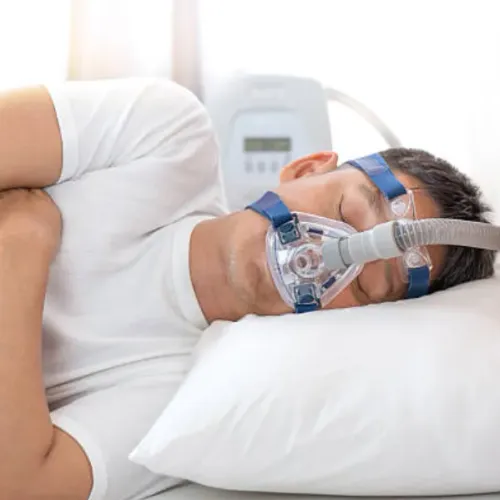
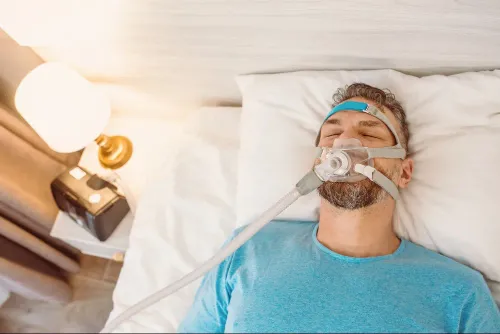
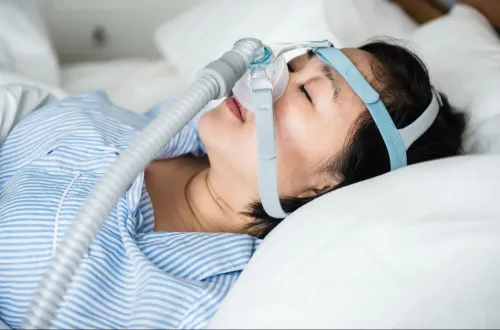
| Stable COPD with chronic high carbon dioxide | Non-invasive ventilation after specialist assessment | Overnight testing and obstructive sleep apnea screening |
The device must fit your hands, strength, coordination and daily routine. A clinician should watch you use it, correct errors, and reassess after a medication change rather than simply adding another inhaler.
Ask for a written flare-up plan covering worsening breathlessness, sputum volume or purulence, contact steps and emergency signs. Severe breathlessness at rest, blue lips, confusion, chest pain or inability to speak in full sentences needs emergency care, not routine follow-up.
Look for a Management Plan That Works Between Visits
An effective plan does not end when the prescription is printed. COPD management in Mumbai should give you a written flare-up action plan, a follow-up date after medication changes or hospital discharge, and a clear route to contact the team between visits.
Stable disease still needs periodic review because symptoms, inhaler technique and oxygen needs change.
Ask whether the service includes:
- Instructions for recognising worsening breathlessness, increased sputum volume or a change to yellow or green sputum, with named contact details and emergency steps.
- A review of smoking, second-hand smoke, biomass-fuel exposure and workplace dust or fumes, plus behavioural support and approved stop-smoking medicines when appropriate.
- Checks of inhaler technique, oxygen saturation, nutrition, physical activity, exacerbations and related conditions at follow-up.
- Reviews of influenza, COVID-19 and pneumococcal vaccination against current Indian eligibility and product schedules.
- Referral to pulmonary rehabilitation, which combines structured exercise, education and self-management support, when breathlessness limits activity or after an exacerbation once you are clinically stable.
- Assessment for oxygen, sleep evaluation or non-invasive ventilation when symptoms, oxygen levels or blood-gas results indicate a need.
A service should tell you when routine care is no longer enough. Severe breathlessness at rest, blue or grey lips, confusion, chest pain, fainting or inability to speak in full sentences requires emergency assessment, not a routine appointment.
Use Follow-Up Quality as the Final Comparison
Compare services by what happens after the prescription: ask about review after medication changes, hospital discharge and a flare-up. A COPD doctor near me who offers only a one-time visit cannot reliably detect worsening symptoms, poor adherence or a new oxygen requirement.
| Service pattern | What it tells you | What to ask |
|---|---|---|
| Scheduled review | Stable COPD is reassessed, not abandoned | Will you review symptoms, flare-ups, smoking or other exposure, nutrition, activity, inhaler technique, oxygen need and other illnesses? |
| Post-discharge contact | The transition home has clinical oversight | Who reviews me after discharge, and within what timeframe? |
| Escalation pathway | Deterioration has a defined response | Can you arrange oxygen assessment, pulmonary rehabilitation, sleep evaluation or hospital care when indicated? |
| Written action plan | You know what to do during a flare-up | Does it specify worsening breathlessness, increased sputum, colour change, contact details and emergency thresholds? |
During a COPD consultation in Mumbai, ask the clinician to check technique and adherence before adding medicines. An unsuitable device, missed doses or insufficient inhalation flow can mimic treatment failure. Ask Dr. Pujan Parikh how stable patients are reviewed and how spirometry, oxygen findings and flare-up history alter follow-up.
- A named contact for worsening symptoms
- A written medication and flare-up plan
- Clear emergency instructions
- Planned reassessment rather than “return if needed”
Severe breathlessness at rest, blue or grey lips, confusion, chest pain, fainting or inability to speak full sentences requires emergency assessment, not routine follow-up.
Related services
Pulmonary (Respiratory) Services COPD (Chronic Obstructive Pulmonary Disease) Treatment COPD (Chronic Obstructive Pulmonary Disease) Treatment View service → |
Pulmonary (Respiratory) Services Pneumonia & Respiratory Infection Pneumonia & Respiratory Infection View service → |
Frequently asked questions
How do I choose a COPD specialist in Mumbai?
Choose a clinician with pulmonology or chest-medicine training and regular experience interpreting spirometry, managing flare-ups, assessing oxygen needs, and using non-invasive ventilation. Ask how often they review COPD patients.
How is COPD confirmed before treatment begins?
Ask whether spirometry will confirm persistent airflow limitation before choosing a long-term treatment path. Your clinician should also review symptoms, smoking or exposure history, flare-ups, and other possible causes of breathlessness.
How should COPD treatment be matched to my needs?
Treatment should reflect your daily symptoms, number and severity of flare-ups, spirometry results, oxygen levels, inhaler technique, and other health conditions.
What should a COPD management plan include between visits?
Look for clear inhaler instructions, an action plan for worsening symptoms, smoking-cessation support when relevant, vaccination advice, pulmonary rehabilitation or exercise guidance, and a defined follow-up schedule.
Keywords