A chest X-ray can show the physical appearance of parts of the lungs, but it does not directly measure how effectively the lungs are functioning. A Pulmonary Function Test helps fill this gap by assessing different aspects of breathing.
For patients in Colaba, Mumbai, pulmonary function testing may be recommended when symptoms such as breathlessness, wheezing, persistent cough, or reduced exercise tolerance require further assessment.
What Does a Pulmonary Function Test Measure?
Pulmonary function testing can provide information about how much air a person can move and how quickly that air can be expelled.
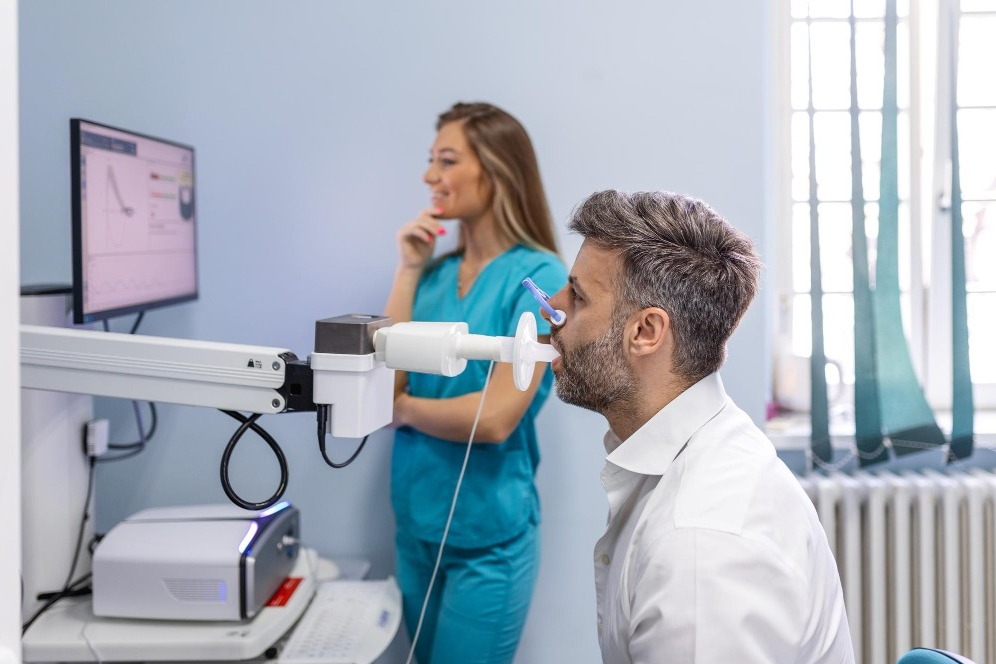
Spirometry is one of the most commonly performed components. During the test, the patient breathes into specialized equipment according to specific instructions.
Depending on the facility and clinical requirement, additional lung function measurements may also be performed.
When Can Testing Be Useful?
Pulmonary function assessment may help when evaluating:
- Asthma
- COPD
- Persistent breathlessness
- Recurrent wheezing
- Chronic cough
- Occupational respiratory exposure
- Interstitial lung disease
- Smoking-related respiratory symptoms
- Response to certain treatments
- Respiratory fitness before selected procedures
The test results are interpreted together with symptoms and medical history.
Can PFT Differentiate Respiratory Patterns?
One important use of lung function testing is identifying patterns of airflow limitation or reduced lung volumes.
An obstructive pattern can occur when airflow out of the lungs is limited, as may happen in conditions such as asthma or COPD.
A restrictive pattern can suggest reduced lung expansion or volume and may require further evaluation for conditions affecting the lung tissue, chest wall, or other structures.
These patterns are not diagnoses by themselves. They provide physiological information that helps guide clinical reasoning.
Why Does Test Technique Matter?
Pulmonary function testing requires active patient participation.
Correct sealing around the mouthpiece, following instructions, and making an adequate breathing effort are important for obtaining reliable measurements. Tests may need to be repeated several times to ensure consistency.
Patients should also follow any instructions provided regarding inhalers, meals, smoking, or strenuous exercise before testing.
How Are Results Used?
Results can help the pulmonologist determine whether further investigation is necessary, assess the severity of airflow limitation, or monitor changes over time.
Dr. Pujan Parikh may consider pulmonary function assessment as part of a broader respiratory evaluation when clinically appropriate.
For patients in Colaba and South Mumbai, a PFT can be particularly useful when respiratory symptoms continue despite apparently normal basic investigations. Rather than relying only on how the lungs look on imaging, functional testing helps show how they actually perform during breathing.
Keywords