Ongoing lung function monitoring is for people whose breathing, treatment response or exposure history creates a risk that a single test could miss. By the end, you will know which tests fit your situation, how to prepare, when results need medical interpretation and how to choose a Mumbai facility for follow-up.
Key takeaways
- Persistent cough, wheeze, breathlessness, or falling stamina can require repeat testing.
- Spirometry measures airflow; full pulmonary function testing examines lung volumes and gas transfer.
- Avoid smoking and strenuous exercise before testing, and follow medication instructions.
- Book assessment with a pulmonologist when symptoms, treatment, or exposure could change lung function.
Who needs repeated lung function checks, and when?
Repeated checks are needed when symptoms persist, a diagnosis can change, or treatment and exposure may alter lung function. Lung function monitoring in Mumbai is not a routine test for every healthy adult; it is relevant to people with cough, wheeze, breathlessness, low oxygen, recurrent infections, or falling exercise tolerance.
- Asthma: test at diagnosis, after starting or changing controller treatment, after a flare-up, and when symptoms become more frequent or severe. A normal result does not exclude asthma; repeat testing or peak-flow records may be needed.
- COPD: repeat spirometry during treatment reviews and after worsening symptoms or an exacerbation, comparing reliable results to guide therapy.
- Interstitial lung disease: schedule spirometry and DLCO reviews to detect falling lung volumes or impaired gas transfer.
- Bronchiectasis: check after repeated infections, a significant flare-up, or a change in daily sputum and breathlessness.
- Occupational exposure: workers around construction dust, textile fibres, chemicals, fumes, cleaning agents, or industrial dust need workday and away-from-work measurements. A normal test on leave can miss occupational asthma.
- Previous tuberculosis: reassess persistent breathlessness, cough, low oxygen, or reduced capacity after treatment.
- Unexplained breathlessness or declining exercise tolerance: repeat testing with oxygen and exercise assessment when walking, climbing stairs, or routine work becomes harder.
Smokers, former smokers, and people regularly exposed to heavy Mumbai traffic or dust should seek assessment if symptoms or reduced stamina develop, even without daily complaints. A pulmonologist should decide the interval and add lung volumes or DLCO when basic spirometry cannot explain the change.
Which breathing test answers your specific question?
Choose the test by the question, not by the label “lung function test monitoring in mumbai.” Spirometry measures airflow and helps identify obstruction, but a low FVC alone does not prove restriction.
| Test | What it answers | When it applies |
|---|---|---|
| Spirometry | Is airflow reduced? | First assessment of asthma, COPD, persistent cough or breathlessness |
| Bronchodilator reversibility testing | Does airflow improve after an inhaled bronchodilator? | Suspected asthma or changing obstruction |
| Peak-flow diary | How much does airflow vary across days? | Asthma symptoms with normal or inconsistent spirometry |
| Lung volumes | Is total lung capacity reduced or air trapped? | Suspected restriction, hyperinflation or air trapping |
| DLCO | Is gas crossing from lung to blood effectively? | Emphysema, interstitial lung disease, pulmonary vascular disease or unexplained breathlessness |
| Pulse oximetry | Is blood oxygen saturation low? | Resting or overnight oxygen checks; it does not measure obstruction, lung volume or carbon-dioxide retention |
| Six-minute walk test | Does exertion reduce oxygen or walking capacity? | Breathlessness, interstitial lung disease, pulmonary hypertension or declining exercise tolerance |
Children need child-sized equipment, coaching and results compared with suitable reference values. A frightened child who cannot produce repeatable blows may need testing again when comfortable. Older adults need extra instruction, rest and attention to effort; weakness, confusion or poor coordination can make results unreliable.
If forced blows cannot be performed reliably, clinicians may use pulse oximetry, walk testing, lung volumes or other specialist assessments rather than treating one doubtful number as a diagnosis. Ask which test will be performed and who will interpret it.
How should you prepare for a lung function appointment?
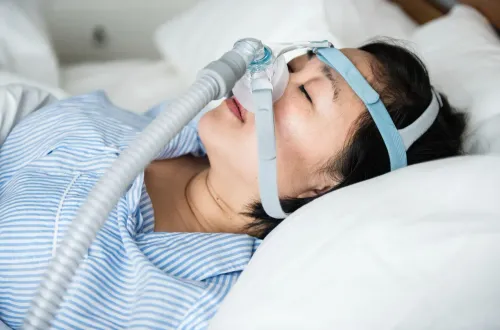
Prepare by confirming which test was ordered and what to pause before arrival. Spirometry, bronchodilator testing, lung volumes, DLCO, exercise oximetry and sleep studies require different preparation.
1. Ask the booking team for inhaler instructions. Do not stop a preventer inhaler unless the clinician tells you; short-acting bronchodilators are often withheld for several hours, while long-acting medicines need a longer interval.
2. Avoid smoking or vaping on the day, and skip vigorous exercise for at least 30 minutes beforehand. Eat a light meal rather than arriving after a heavy one, which can restrict deep breathing.
3. Wear loose clothing. During testing, a nose clip prevents air escaping through your nose, and you must seal your lips around the mouthpiece. Expect several hard, fast, repeated blows; poor effort or coughing can make the result unreliable.
4. For bronchodilator testing, the laboratory records baseline blows, gives an inhaled reliever, waits for the instructed interval and repeats the measurements. Book enough time for both stages, and attend when symptoms are present if your clinician is investigating variable asthma.
5. Ask whether you need a referral and whether the facility has the exact test and a clinician to interpret it. Take previous reports, scans, medication lists, peak-flow readings and details of smoking or dust exposure.
Tell the laboratory before booking about a recent heart attack, chest surgery, pneumothorax, coughing blood, severe breathlessness, fainting or uncontrolled blood pressure. Pain, confusion or inability to seal the mouthpiece can also prevent reliable testing.
Where should you book lung function assessment in Mumbai?
Choose the setting that can perform the test you need and explain what happens next, not simply the nearest appointment. For lung function assessment in Mumbai, ask about technician training, equipment calibration, daily quality checks, and whether the laboratory documents acceptable and repeatable efforts.
| Option | What to check | Best fit |
|---|---|---|
| Hospital respiratory laboratory | Spirometry, bronchodilator testing, lung volumes, DLCO, exercise oximetry, overnight oximetry, or polysomnography; pulmonary-function quality controls; clinician interpretation | Complex disease, falling results, low oxygen, or testing that may need imaging and specialist coordination |
| Diagnostic centre | The exact test available, equipment calibration records, reference equations, effort acceptability, bronchodilator status, and the name of the interpreting doctor | A straightforward test when the centre sends a complete report to your treating clinician |
| Pulmonologist’s clinic | Whether testing is performed on site or referred; access to prior reports, medication review, examination, and scheduled reassessment | Asthma, COPD, breathlessness, or another condition needing longitudinal review rather than an isolated number |
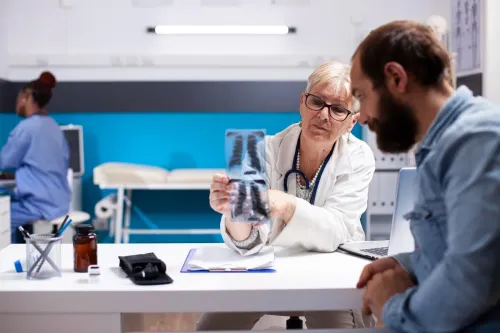
A useful report identifies the test, reference equations, patient effort, repeatability, and clinician’s interpretation. A technician can conduct the manoeuvre, but a pulmonologist for lung function must relate results to symptoms, medicines, haemoglobin, smoking exposure, imaging, and previous values; a low DLCO is not a diagnosis by itself.
Check travel time across Mumbai, parking, railway or Metro access, and whether you can return promptly after an abnormal result. “Respiratory monitoring doctor in Mumbai” is not a separate qualification; ask which pulmonologist reviews the results and how follow-up is arranged.
Ask Dr. Pujan Parikh whether he offers the specific test and ongoing review you require.
Related service
Pulmonary (Respiratory) Services Lung Function Assessment & Monitoring Lung Function Assessment & Monitoring View service → |
How are results used to plan monitoring over time?
A monitoring plan changes after diagnosis, a medication change, or a worsening event. Repeat testing after asthma treatment starts, an exacerbation, pneumonia, tuberculosis, bronchitis, or a new occupational exposure shows whether airflow and gas exchange recover, remain stable, or deteriorate.
Compare tests only when the efforts meet quality standards and use the same method, reference equations, and preferably the same laboratory. A meaningful decline is a confirmed fall larger than ordinary test variability, especially when breathlessness, cough, exercise limitation, or oxygen reduction also worsens; one poor blow is not a trend.
| Situation | How results guide follow-up | Essential context |
|---|---|---|
| Asthma or COPD | Repeat spirometry after treatment changes and symptom flares | COPD requires persistent post-bronchodilator FEV1/FVC below 0.70 plus compatible symptoms or exposure |
| Pneumonia, tuberculosis, or bronchitis | Recheck recovery when symptoms or exercise capacity do not return | Compare with the pre-illness result and imaging |
| Workplace dust, fumes, fibres, or chemicals | Record peak flow or spirometry on workdays and away days | A normal test during leave can miss occupational asthma |
| Interstitial lung disease or unexplained breathlessness | Track FVC, DLCO, oxygen, and walking performance | Use serial results, not one isolated value |
For asthma, record peak flow on waking and in the evening, before reliever medication, for the period your clinician sets. Note symptoms, medicines, work exposure, and infections; repeated workday-versus-away-day changes are more useful than a single reading.
Normal spirometry does not exclude asthma. Low FVC needs total lung capacity testing before it is called restriction, while low DLCO requires haemoglobin, smoking, lung-volume, imaging, and test-quality context. A pulse-oximeter reading also depends on circulation, nail products, and device fit; interpret it with symptoms and clinical assessment.
Frequently asked questions
Who needs repeated lung function checks, and when?
People with persistent cough, wheeze, breathlessness, low oxygen, recurrent chest infections, or declining exercise tolerance may need repeat checks. Monitoring also helps when a diagnosis is uncertain, treatment changes, or workplace and environmental exposure continues.
Which breathing test answers a specific lung function question?
Spirometry measures airflow and helps assess conditions such as asthma and COPD. Lung volume testing measures how much air the lungs hold, while diffusion capacity testing assesses gas transfer into the blood. A six-minute walk test evaluates oxygen levels and exercise tolerance.
How should you prepare for a lung function appointment?
Wear comfortable clothing, avoid smoking before the appointment, and do not perform strenuous exercise beforehand. Ask the clinic whether to pause inhalers, because the correct instruction depends on the test and its purpose.
Where should you book lung function assessment in Mumbai?
Choose a respiratory clinic or hospital with calibrated pulmonary function equipment and a pulmonologist who can interpret the results alongside your symptoms, examination, oxygen level, and medical history.
How are results used to plan monitoring over time?
Your doctor compares the result with predicted values and previous tests, then considers symptoms, treatment response, oxygen levels, and exposure history. The next test is scheduled when a change in disease or management needs confirmation.
Keywords